Part 2: The Agony & Ecstasy of Aussie Futsal
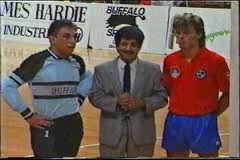
Osman was part of the first ever Australian indoor team (formed in 1984), played in one FIFA and three FIFuSa world cups (15 national caps, the most of any Australian indoor player), scored hat-tricks against Argentina, Italy and Canada, has lifted the Pacific Cup, and helped Sydney Tornadoes win the first three National Indoor Soccer League titles. He won another championship with Western Sydney Swans.
After helping forge Futsal from its humble beginnings Osman still contributes today in state women?s programs and as coach at NSW Premier League club Mascot Vipers, but his fascinating story began as a seven-year-old son of Cypriot migrants who travelled to Australia in 1972 looking for a better life.
Osman grew up in Punchbowl, went to Bankstown Boys High and played football for Canterbury-Marrickville Olympic in the premier league equivalent when he joined friends for an indoor game at Revesby YMCA in 1982 to keep fit.
Two years later he was on his way to America for a relatively successful tour with the first ever Australian team.
In 1985 a young Osman played in front of 21,000 manic Spaniards at the second FIFuSa world championships, scoring a hat-trick in a 6-1 win over Canada and lapping up every ray of Australia?s international sunshine despite being lessoned 12-zip by the hosts.
Also that year he and brother Ergan became foundation players in the first-ever National Indoor Soccer League (NISL), helping the Mike Wrublewski owned Sydney Tornadoes win a three-peat of titles in front of massive crowds and TV audiences.
Melbourne Buffaloes claimed the 1988 crown by beating Western Sydney Swans but the Osmans returned to the grand final winners circle the following year as the Swans bounced back from 3-6 down against the White Eagles to lift the trophy in a crazy 9-6 triumph at a packed Homebush Sports Centre.
The Osmans ended up winning four of the first five national league titles.
?My brother and I played together in all our NISL matches from start to finish,? Erkin said. ?The fact we knew each other?s game and could read what the other was trying to do was a huge advantage. The best case was the 1989 grand final against White Eagles; those six second-half goals were scored through our combination in attack.?
?It was an amazing time, to be honest, and very hard to relate to people who didn?t get to experience it.
?There was this buzz about it all. SBS were showing highlights and a game of the week and I was working in a bank at the time and people were coming in and saying they?d seen me playing on TV.
?I honestly thought it would only be players and their friends watching it. It really had wide appeal? people still talk about it today.?
(* For a taste of the action, here?s footage of the 1989 NISL semi-final between White Eagles and Sydney Tornadoes hosted by Andy Paschalidis, and a 1987 Canberra Strikers vs Gridline Eagles match hosted by Johnny Warren)
All eyes on Australia
It was boom time for the Aussie game and in 1987 they hosted the first Pacific Cup, knocking over fancied Japan on its way to a 3-1 loss to favourites Mexico in extra-time of a rousing final in Canberra.
A solid global showing helped Australia win hosting rights for the 1988 FIFuSa world championships and in front of a national TV audience the ?Indooroos? finished group runners-up after they humbled Hungary 16-0 and Italy 12-0, losing 6-1 to Uruguay.
In the second round Australia did well to contain juggernauts Brazil in a 5-0 loss and a second defeat to eventual champions Paraguay 8-1 ended their run, but the Aussies bowed out on a high note by conquering a strong Argentina side 7-3 in a high-octane contest at Geelong to place sixth overall.
?The 1988 world cup games were great,? said Osman. ?It?s just a shame there wasn?t more done to promote it. A lot of Australians didn?t know it was happening and missed out on the quality overseas players on display.?
?It was also a shame the best game we played [a 7-3 win over Argentina] was the only one they didn?t televise, probably because we couldn?t make the finals.
?It was an awesome game, with both teams really going at it in front of a vocal crowd; but there?s no footage of it at all. A real shame? I scored a hat-trick in that one.?
(* Fortunately there is footage of an Osman hat-trick and a four-goal dazzler from heralded Radovan ?Shishka? Filipovic in a 12-0 defeat of Italy that pushed Australia into the second round of the 1988 world titles, watch the highlights from Canberra)
In fact there?s not much material available at all on Australia?s 1980s Futsal prowess, mainly due to poor record-keeping in pre-internet days (remember them?), and the lack of footage and documentation is more regrettable as the Australian game slipped badly after such steady initial progress.
Osman rated the Argentina hat-trick as his fondest Australian memory, followed narrowly by Australia?s only success at an international tournament when the Indooroos travelled to Mexico and beat Costa Rica 3-1 in the final of 1989 Pacific Cup.
It was also the year the Aussie Futsal earth shuddered following FIFA?s split from FIFuSa.
Power struggle dagger
Futsal was caught in a tug-of-war between two well-established international bodies (FIFA and FIFuSa ? Ed: read previous installment) and the ones who suffered most were the players, sponsors and supporters being pulled separate ways in a limited Australian market.
The rift saw indoor specialists Osman, Shishka Filipovic, Bruce Thurlow and co overlooked for the first FIFA Futsal World Cup in the Netherlands in 1989, and a team of NSL stars and Socceroos greats sent instead (including Alan Davidson, Paul Trimboli, Robbie Hooker, Oscar Crino and goalkeeper Jeffrey Olver).
The Aussies did well to hold eventual semi-finalists USA to a 1-1 draw and beat unfancied Zimbabwe 4-1, but a 6-1 loss to Italy forced their early exit after they finished third in their group.
By 1990 James Hardie had pulled its sponsorship and the national league disbanded, robbing players of an elite competition, and a lack of cohesion at an international level showed up badly when Australia lost its way at a farcical 1991 FIFuSa world championships in Milan, Italy.
?No one came,? Osman recalled. ?There were empty stands, no atmosphere, and a complete waste of time.?
A bit of common sense saw Australia assemble a strong indoor side for the 1992 FIFA Futsal World Cup in Hong Kong and the Indooroos were outstanding in a tight 3-0 loss to defending champions Brazil (who would go on to win the title again), and they headed Belgium 1-0 before a heartbreaking 2-1 loss dashed their progression hopes.
The Indooroos finished the tournament with a highly entertaining 8-6 win over rivals Costa Rica, led by doubles from Filipovic, Vince Nastoski and Borce Atanovski.
But by 1993 the good times had gone ? the reasons varied and riddled with fiction and fact.
While some blamed the global brawl between FIFA and FIFuSa, others pointed the finger internally at political power-plays, disunity and disorganisation.
?I don?t know exactly what happened,? Osman said. ?I could be wrong but I think Channel-9 was trying to get involved at one stage and they tried to do a promotion for the national league that SBS didn?t like. There was also talk about a blue between [Tornadoes owner] Mike Wrublewski and [Futsal chief] Joe Brent.?
?I?m not 100 per cent sure why the whole thing fell away. More people joined up to play but we weren?t touring and getting exposure against better players and teams. Brazil came out in 1993 and played 5-6 games at Homebush and Canberra, but after that the tours just stopped.?
?It definitely had to do with money. We had to fundraise for ourselves in the early days, but we eventually got some business sponsorship together and that put us on the map? after the 1992 world cup the whole thing went downhill.?
?There was a bit of infighting obviously, a bit of a power struggle, and many good people didn?t want to get involved in the politics, and that left the bad ones in high positions making all the decisions. Many of the top players simply walked away.?
Time to aim high
Australia had a terrific early run with a team that brought with them a wealth of talent that developed with international experience.
Shishka Filipovic was an absolute star of the game in its day, and the early Indooroos held firm behind some superb glovework from goalkeeper Bruce Thurlow.
Then there were the attacking and defensive wiles and wares of Borce Atanasovski, Robbie Stuart, Glenn Jeffery and Erkin Osman, who lamented the fact Australia lost its global Futsal status so easily after such a promising start; but he?s definitely buoyed by the sport?s recent rise.
?Futsal?s in a much stronger place now and starting to get back to where it should be? but we do need to start the tours again ? even if we have to fundraise ourselves again. Whether it?s junior or seniors it?s important for our development that we play against the world?s top teams,? he said.
?We?re part of Asia and it?s so close that we can tour there easily, but we should be aiming for South America and Europe to really test ourselves.?
A household name in the 1980s, well, those with SBS, Osman saw great value in pursuing a new televised national league and said all Futsal competitions should start using international rules (including stop-clock) to help with player development.
?They should start off [the national league] on the eastern side of Australia ? Melbourne, Sydney, Canberra, Brisbane, and regional centres like Wollongong, Newcastle and Gold Coast ? and then try to expand with Adelaide and Perth,? he said.
?A proper national league has to happen. We need players to test themselves against the best in Australia.
?Obviously finance stands in the way because players have to get from one state to the other, that?s the biggest obstacle. They might be able to play double-headers to cut some costs, but they really need to get some good sponsors on board.
?That?s why the FFA [Football Federation Australia] has to step up and help Futsal increase its profile,? Osman said. ?It?s a bit of a catch-22 situation, but if the product?s good the sponsors will come. The sport is attractive to watch, explosive, and with plenty of superstars for the youngsters to follow.?
?And looking at the number of players I?m sure every team will be able to field strong sides. There were some very weak clubs in the national league when we first started.
?Today?s youth is playing much better than we were. I didn?t start at eight years of age, I came in as a 17 year old. These kids are going to be so much better as they come through and are already doing unbelievable things on the ball. Our technical development has been fantastic, it?s our tactical awareness that needs the most work.
?Even though it?s not a national league, kids are playing at a very high level in the NSW Premier and Super League; the quality coming through is amazing.?
Giving back to Futsal
A Mascot Vipers clubman, Osman?s coaching origins date back to being Jimmy Roberts? assistant in a three-match series against Brazil in 1993. But he attributes the bulk of his development to former Brazilian assistant coach Geraldo Delamore who stayed in Australia following that tour.
?I learned a lot from Delamore; I learned a lot just from watching the Brazilians because of how structured they were,? he said. ?They had so many combinations, but I watched what they did and copied all their moves. I still use them today. You always learn from the best, like watching everything Barcelona does on an outdoor field.?
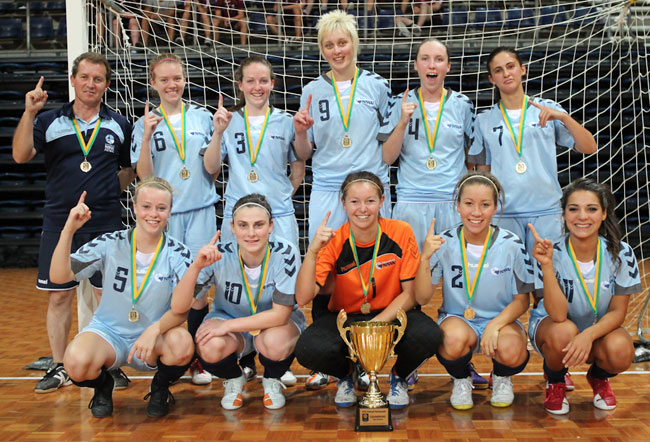
Osman?s not the only veteran giving back to Futsal. Futsalroos coach Steve Knight ran around in the old national league, while Jamie Amendolia (the only Aussie to score at two FIFA world cups) coaches F-League outfit East Coast Heat and NSW Premier League side Sydney City Eagles.
?A lot of players who walked out on the game are now coming back because they see the sport is doing the right thing and finally getting its act together,? Osman said.
?They?re getting involved and helping out at club level, not just coaching. And the contributions are making a massive difference to the game.
?We now have players who play Futsal only, they no longer play outdoor football at all. At first it was because they believed by playing in a smaller area, indoor helped you cope better under pressure in outdoor. But it?s the involvement that really won them over. There?s nowhere to hide in Futsal; it?s fast and fun, anyone can score a goal; it?s all action.?
Osman?s not the first person to link small-sided football games with the development of better players overall but, as football identity Les Murray wrote, ?The indoor game continues to be sidelined, like some insignificant cousin, its critical importance ignored to football?s utter detriment?.
And although he admitted that becoming a mainstream sport would be a long, difficult journey, Osman believed a national indoor league was possible and a great vehicle for the round-ball game to travel in.
?More funding, greater support, and better recognition,? he said. ?If it can achieve this then the overall advantages for Australian Futsal, and football in general, are huge.?
Football NSW Futsal manager and F-League competition manager Damian Briggs agreed.
?Our relationship [with football] does need more work. South American countries develop their juniors with Futsal and you can see the benefits? he said.
?There is a Futsal culture over there? and the dream here is to [one day] see Futsal as a mainstream sport in Australia.?
Briggs acknowledged the great work done to help get Futsal to its current position and knows there?s still plenty to do to realise all of Australia?s ambitions.
But that?s another story?
* In the third installment of Futsal in Australia, Briggs and the eight F-League coaches discuss F-League development and prospects of a televised national competition in the future.
Briggs will also talk about a proposed women?s F-League next year as part of Australia?s preparation for future growth should a global push for Futsal to be included at the summer Olympic Games and a Women?s World Cup gain traction.
Visit the F-League Facebook page (FNSWFLeague) and F-League competitions section for more details.
by Dan de Nardi