
First Aid & Defibrillators
First Aid and Automated External Defibrillators (AED) are important for management of injuries and emergencies in sport clubs.
Defibrillators
When a cardiac arrest occurs and a person is unresponsive and not breathing, an Ambulance is called immediately, CPR commences and continues until a defibrillator can be used, or an ambulance arrives. A response within the first few minutes can result in a greater chance of survival. Modern defibrillators are easy to use and will only deliver a shock if required.
Club First Aid Officers & Responders
Clubs should have a first aid officer or responder in attendance while games are in progress. First aiders should be familiar with how to provide basic first aid, perform CPR and use a defibrillator.
Club Defibrillators
- NSW Office of Sport – Club Defibrillator Grants
- St John Ambulance – providers of AEDs, AED accessories and Training
- St John Ambulance – First Aid & CPR signage
Heart Health Awareness
- Heartbeat of Football – Promoting increased awareness of pre-participation health checks and early defibrillation. For information about heart health testing days – click here
- Marc Arcuri Foundation – The Marc Arcuri Foundation has donated over 100 defibrillators to football clubs.
- Heart of the Nation – a program of the Heart Foundation raising awareness of the benefits of CPR and early defibrillation through community CPR and AED training around Australia.
Concussion
Football Concussion Guidelines
Sport Related Concussion Response
A player with a suspected concussion must be immediately removed from the match or training session. However, if a neck injury is suspected, the player should not be moved, their neck stabilised while awaiting assessment by a medical practitioner or paramedic.
A player with suspected concussion must not:
- take further part in any activity, including training or matches or other sports
on the day of injury, even if the player reports feeling recovered. - be left alone
- consume alcohol
- take any pain medication or anti-inflammatories
- should not drive a motor vehicle
Players with suspected concussion should be assessed by a medical practitioner with appropriate training in concussion management within 3-4 days of the concussion event.
Emergency medical assessment needs to be sought if any of the following signs or symptoms are observed or develop:
• Worsening headache.
• Repeated vomiting.
• Excessive drowsiness or inability to be awakened.
• Seizures (arms and legs jerk uncontrollably).
• Inability to recognize people or places.
• Any behavioral change, increasing confusion, irritability.
• Slurred speech, double vision.
• Weakness or numbness in arms or legs.
• Unsteadiness on feet.
• Loss of consciousness at the time of injury.
A player with a suspected concussion should have a minimum of 24-48 hours of relative physical and cognitive rest. (ie., minimise physical activity and screen time) before resuming (light) daily living activities.
Refer to the FA Concussion Guidelines for full information.
Football Australia Return to Play Program Requirements
Further Information
- Concussion symptom checker & response – Health Direct
- Concussion in Sport – Sport Australia
First Aid
At some point every club will be faced with an injury requiring first aid. Planning ahead will go a long way to improving how well your club responds.
Having multiple people trained in first aid or as a Sports Trainer improves the standard of care which can be provided and provides flexibility when people are away, so you are not reliant on just 1-2 people. It enables your club to respond effectively to injuries and incidents, and by training your own club first aiders helps to reduce the need to pay for external providers.
- Football Australia First Aid Information
- St John First Aid Factsheets
- First aid in the workplace – Safework NSW
Injury Reporting
Clubs should use an injury report form or reporting process for recording participant injuries. A record of all injuries should be retained by clubs for insurance purposes. Contact your club to check whether your club or association has an injury reporting form or an online reporting process.
Reporting Injuries
All injuries sustained during participation should be reported to the participant’s club. If injured while participating, report your injury immediately to your coach or a club official. The templates below may be used to report or record general injuries and serious injuries.
A Serious Injury Report form should also be completed if an injury results in the patient being admitted to hospital for further treatment. Transport by ambulance or a visit to an Emergency Department and then being discharged to go home does not require a serious injury report.
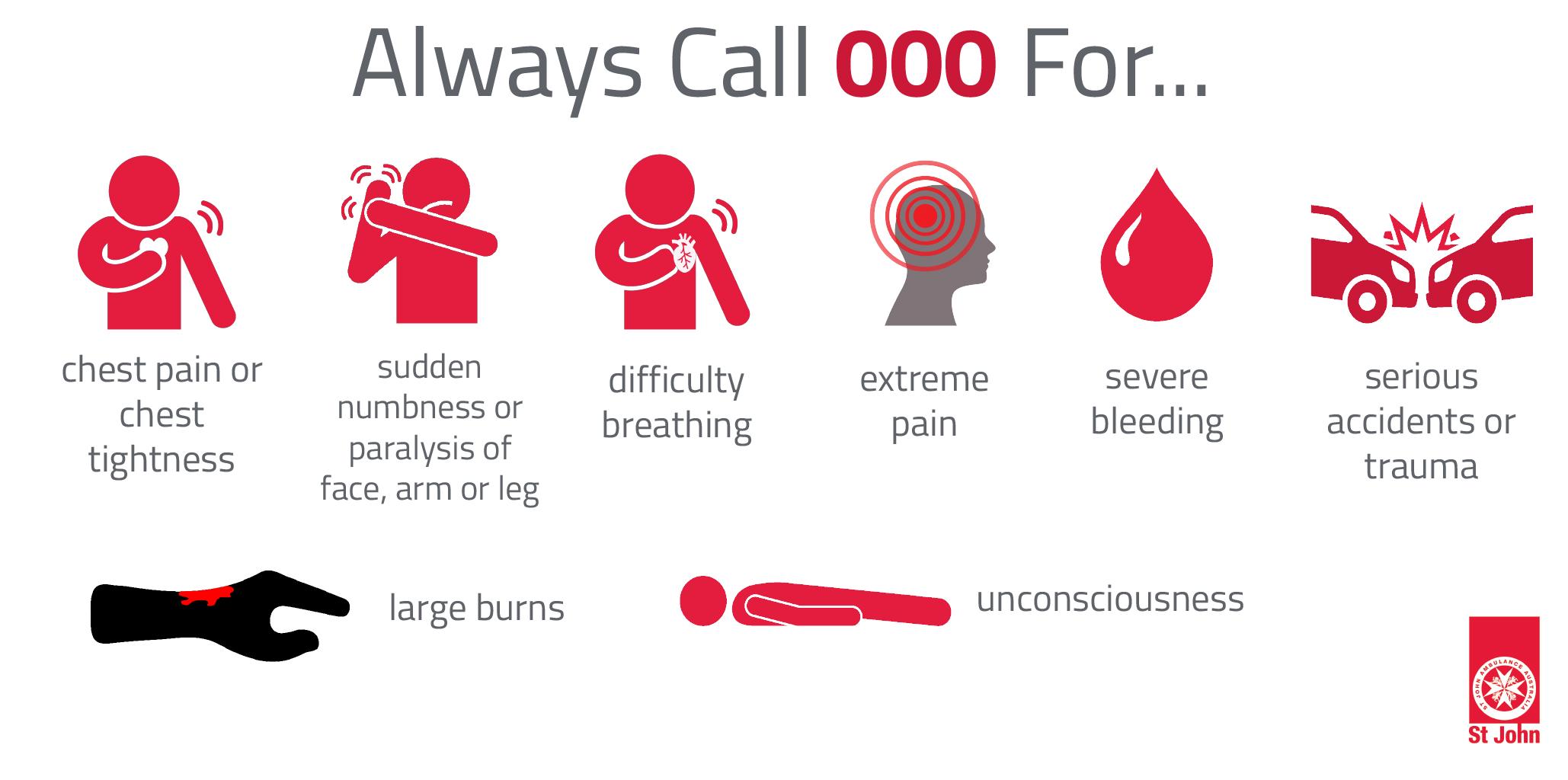
When to Call an Ambulance – Triple Zero (000)
In urgent medical situations ring Triple Zero (000) and ask for AMBULANCE. Do not panic or drive to hospital yourself. People driving themselves to hospital in urgent medical situations can risk further injury to themselves and accidents involving other road users.
Examples of medical emergencies:
- Sudden collapse
- Unconsciousness
- Seizures
- Chest pain
- Breathing difficulty
- Neck or spine injuries
- Injuries to the head or face
- Fractured bones
- Uncontrollable bleeding
- Vehicle accident
- Any other life threatening injury
NSW Ambulance Posters & Club Resources
NSW Ambulance paramedics are highly trained health professionals. They bring modern emergency and resuscitation equipment to the patient and commence lifesaving treatment at the scene as well as continuing this on the way to hospital.
- Triple Zero (000) Sport Venue – NSW Ambulance poster
- Triple Zero (000) What you need to know – NSW Ambulance poster
- Calling An Ambulance – NSW Ambulance factsheet
- NSW Ambulance Sporting Ground Wallet Card – for ground officials
Who pays for my ambulance bill?
Any person transported by ambulance will be invoiced directly by NSW Ambulance for the services provided and will be responsible for payment of the invoice and for making any claim through their Private Health Insurance. Registered participants may be eligible to lodge a claim for ambulance expenses under the FNSW Personal Accident Insurance policy, subject to the policy’s terms and conditions. For information visit the FNSW insurance website.
Mental Health
The physical benefits of playing sport are well known and there are also some huge mental health benefits to participation in sport, including to improve your mood, improve your concentration, reduce stress, improve sleep habits, boost your self-confidence, social benefits, learning the value of teamwork, developing leadership skills, learning how to deal with setbacks, and to build resilience.
Visit our Mental Health & Wellbeing webpage for more information
Heart Health Checks
In an Emergency Dial Triple Zero (000)
- When to call an Ambulance
- Calling an Ambulance
- How to perform CPR
- Responding to Sudden Cardiac Arrest (SCA)
- First Aid Basics
- FIFA First Aid Manual
Injury First Aid
- St Johns First Aid - various
- ACL / Knee Injury - first aid
- ACL Injury - management
- Asthma - first aid
- Cardiac arrest - first aid
- Cardiac arrest/Chest pain - first aid
- Concussion - first aid
- CPR - How to perform CPR - first aid
- Dental injury - first aid
- Epilepsy - first aid
- Heat stroke - first aid
- Heat stroke – treatment
- Spinal and neck injury - first aid
- Sprain and strain - first aid
Cardiac Arrest
- Cardiac Emergency Response
- Responding to a cardiac arrest
- CPR - How to perform CPR (poster)
- How to use an AED (video)
- Is your club rescue ready?
Concussion
- Football Australia Concussion Guidelines
- Concussion Signs & Symptoms
- Concussion - What to do
- Concussion - FAQs
- Adult Return to Play Protocols
- Child & Teen Return to Play Protocols
- FA Concussion webpage
- Pocket concussion recognition tool
Injury Factsheets
- SMA Injury Factsheets
- Achilles Tendon injuries
- ACL Injury Prevention & Symptoms
- ACL Injury
- ACL / Knee Injuries
- Asthma and the athlete
- Concussion Guidelines - FA Community Football
- Dental injuries
- Dental Injuries & Prevention
- Dental - Mouthguards
- Heat illness - Beat the Heat (Smartplay)
- Preventing football injuries (Smartplay)
- Preventing football injuries (Better Health)
- Soft tissue injuries
- Sunsmart in Football
Emergency Planning
- Medical Emergency Planning
- St John Safe Accreditation for Sports Clubs
- Safe Work Australia First Aid Requirements
First Aid Training
- MHF First Aid Training Packages & Defibrillator Training
- St John First Aid Courses
- Red Cross First Aid Courses
- Sports Medicine Australia – Course dates
First Aid Kits & Contents
Club Posters
- Dial 000 Clubhouse posters
- Cardiac arrest response poster (FIFA)
- CPR Chart - how to perform CPR club poster
- First Aid for Seizures - poster
- FIFA Perform+ Injury prevention - posters
- NSW Ambulance Medical Emergency Plan - poster
- Safe Football - club emergency poster