Look After Your Coach Day
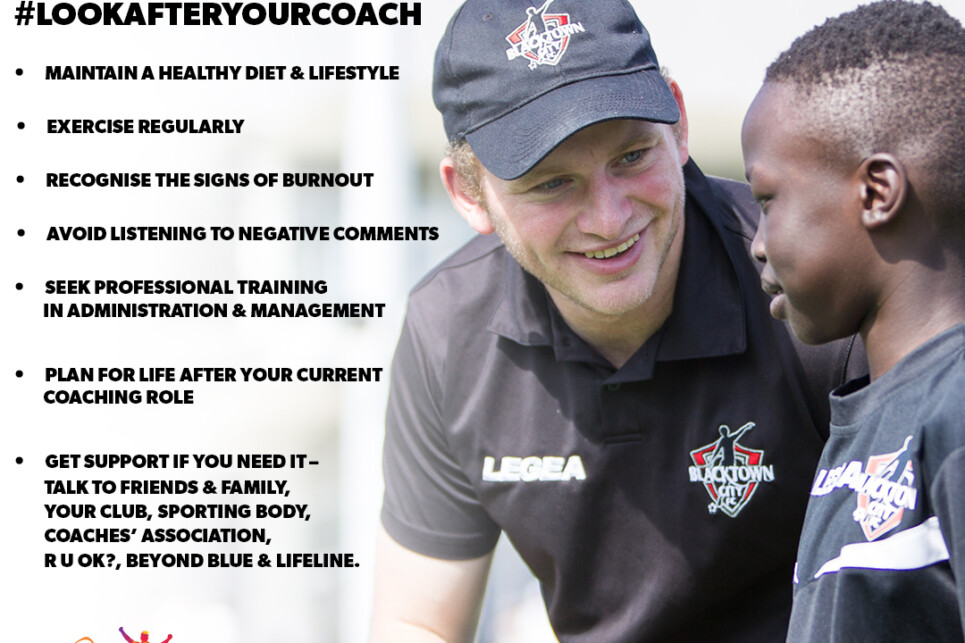
As the football season closes, grand finals are celebrated and summer sports start, today is #lookafteryourcoach day and the launch of a week-long campaign to highlight the need for improved physical and mental wellbeing amongst Australian coaches by promoting awareness of the important role they play in the Australian community.
The campaign encourages Australians who play sport at all levels to think about the coaches who make their sport possible, consider the sacrifices they make, and say thanks for their great contribution.
The football community is asked to acknowledge one of the most important roles in sport and the wider community – the role of coach.
Often taken for granted and the first to take any blame for a team’s actions or poor performance (regardless of whether they are paid or volunteers), it is often overlooked that sport at any level cannot exist without a coach.
Coaches are expected to juggle many skills ranging from psychologist, mentor, strength and performance, nutrition, chauffeur and game administrator to name a few.
Adding to this, many coaches do not have an exit strategy for life after coaching which may end abruptly when contracts are terminated or not renewed.
At the professional level, coaches ride the highs and lows with their players and teams, work long anti-social hours and often travel for long periods away from their family and friends.
They rarely have the luxury of switching off as when they are not coaching, they are planning, analysing, and consulting.
One athlete who can speak from personal experience is Australia’s most successful triathlete, Craig Alexander who is Ambassador for the Campaign. Craig has performed consistently at international level for over 25 years and remains a top ten finisher at age 46.
“I applaud the #lookafteryourcoach initiative.
“Over my years competing, I’ve experienced and observed coaching at all levels from international competition through to watching my three children participate in local sport at Cronulla. Coaches live and breathe their roles, and for many it consumes their every waking moment.
“I’ve seen first-hand how they regularly make personal sacrifices for the sake of their teams and athletes.
“This level of passion and intensity often comes at a cost and their health and their relationships can suffer. Coaches experience an intense level of public scrutiny, and they are either ‘hero or zero’ according to the result.
“The important thing is for coaches to recognise the warning signs of burnout and take self-care action early. Watchouts include mental and physical fatigue, putting off tasks, feeling discouraged and losing passion for their sport. Coaches can feel very isolated, but there is support available through talking with trusted friends and family, their club, sporting federation, coaching association and support organisations such as RU OK?, Lifeline, and Beyond Blue.”
Social media activity encourages Australians who play sport at all levels to think about the coaches who make their sport possible, consider the sacrifices they make, and say thanks for their great contribution by posting a message and tagging their coach on the #lookafteryourcoach Facebook page.